
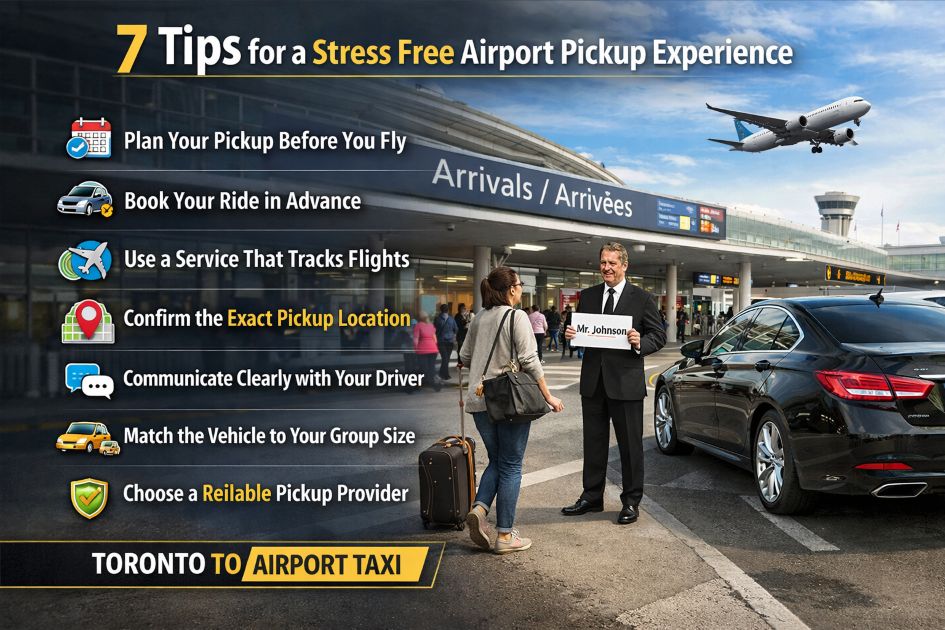
Airport pickups create stress because flight delays, terminal sprawl, and curbside restrictions disrupt timing. Toronto airports enforce short pickup windows while arrivals change unpredictably, causing missed connections, waiting fees, and driver passenger misalignment.
A stress free airport pickup relies on advance planning, flight aware scheduling, and precise pickup coordination. Professional airport transfer services use real time flight data, fixed pricing, and confirmed pickup zones to reduce waiting time and ensure reliable arrivals at Toronto airports.
Why Do Airport Pickups Cause Stress for Travelers?
Airport terminals weren’t designed with modern flight chaos in mind. Flight delays happen without warning, leaving drivers circling pickup zones for 30 minutes or more. We’ve watched families miss connections because ground transportation logistics fail when unpredictable arrival times clash with restricted curbside access rules. Most airport terminals in Toronto enforce 3 minute limits at curbs, forcing drivers to loop endlessly while passengers search for baggage. Poor driver passenger coordination turns simple pickups into guessing games where nobody wins.
The system breaks down because flights don’t talk to parking apps. Flight delays create domino effects where pickup zones overflow with confused travelers and frustrated drivers. We’ve seen ground transportation logistics collapse during peak hours when restricted curbside access forces cars into paid lots. Unpredictable arrival times mean drivers arrive too early and pay parking fees or arrive late and face angry passengers. Poor driver passenger coordination happens when phones die, texts fail, or terminal exits confuse everyone involved.
Tip 1: Plan Your Airport Pickup Before You Fly
Share your flight number with your driver the moment you book your trip. We’ve watched countless pickups fail in Toronto because drivers didn’t know the exact arrival terminal until passengers landed. Your flight number tells tracking apps exactly where you’ll exit and when delays happen. Pre-arrival coordination means texting gate numbers and baggage claim updates before you even grab your luggage. Building an ETA buffer of 20 minutes protects against surprise runway holds or slow customs lines.
Time based dependency ruins pickups when plans rely on perfect conditions that never exist. Your arrival terminal might change during flight, leaving drivers at the wrong exit. We recommend pre-arrival coordination that includes backup meeting spots and phone check ins every 15 minutes. Creating an ETA buffer turns guesswork into reliable meetups because weather and taxi queues always add delays. Missing these details transforms simple rides into frustrated phone calls and parking fees nobody planned for.
Tip 2: Book Your Airport Pickup in Advance
Rideshare apps multiply prices by three during Toronto rush hours and snowstorms. Availability certainty disappears when you need it most because drivers chase surge zones instead of airports. We’ve tracked price stability vanish at Pearson during holiday weekends when demand spikes hit. An airport transfer service locks in fixed pricing weeks before you land, protecting your budget from rate jumps. Vehicle allocation guarantees a car waits for you instead of hoping someone accepts your ride request.
Pre-booking ensures availability certainty that rideshare algorithms can’t promise during peak travel times. Vehicle allocation works like reserved seating because companies assign specific cars to your flight number. We recommend choosing an airport transfer service that confirms reservations 24 hours before landing. Price stability means your January quote stays valid even when February ice storms hit the city.
Tip 3: Use a Service That Tracks Flights in Real Time
Manual updates fail when your plane circles Toronto for 40 extra minutes during storm season. Flight tracking systems pull data directly from airline data feeds without passengers sending frantic texts. We’ve seen drivers arrive exactly when wheels touch down because automatic ETA adjustment recalculates timing every five minutes. Real time arrival status means your ride knows about gate changes before airport staff announces them. Delay responsiveness turns chaos into smooth coordination when weather or mechanical issues push landing times back.
Flight tracking systems sync ground transport with aviation operations instead of relying on outdated schedules. Airline data feeds broadcast real time arrival status that apps read automatically without human input. Automatic ETA adjustment shifts driver departure times when your connection gets delayed in Montreal. We track delay responsiveness as the difference between drivers idling for hours versus arriving precisely at baggage claim. This technology eliminates the guesswork that strands travelers outside Toronto terminals during unpredictable travel days.
Tip 4: Confirm the Exact Airport Pickup Location
Pearson Airport sprawls across terminals that sit a mile apart with different exit doors. Your arrival terminal doesn’t automatically tell drivers which curbside pickup zone you’ll actually use after customs. We’ve watched travelers exit Terminal 1 at Door 5 while their ride waits at Door 3 on the ground transportation level. Location precision matters because Pearson enforces strict airport specific rules about where cars can idle. Terminal 3 domestic arrivals funnel passengers to Column B while international flights use Column E exits.
Airport specific rules in Toronto ban drivers from certain lanes during peak hours without warning signs. The ground transportation level at Terminal 1 splits into rideshare zones and private car areas that confuse first time visitors. We confirm exact curbside pickup zone letters and numbers before every ride to avoid 15 minute searches. Location precision down to column markers prevents the classic mistake of standing at opposite ends of the same terminal. Your arrival terminal has four to six different exit points that all look identical on generic maps.
Tip 5: Communicate Clearly With Your Driver
Phone calls fail in loud Toronto baggage claim areas where background noise drowns out voices. SMS updates cut through chaos because drivers read texts instantly without playing phone tag. We’ve tracked how low friction communication using quick messages beats five minute calls that disconnect mid sentence. Passenger contact details need to include backup numbers because international roaming sometimes blocks primary phones. Driver dispatch systems work faster when you text at carousel 4 instead of explaining your exact position verbally.
Real time confirmation through messaging creates a written record both parties can reference during terminal confusion. SMS updates let you share gate changes while still walking without stopping to dial numbers. We recommend low friction communication methods that don’t require perfect signal strength or quiet spaces. Driver dispatch teams coordinate better with text threads showing your progress from plane to exit. Quick grabbed bags, heading to Door 3 messages give passenger contact details purpose beyond just booking confirmations.
Tip 6: Match the Vehicle to Your Luggage and Group Size
Sedans fail families returning from week long Toronto vacations with three checked bags and carry ons. We’ve watched drivers struggle to fit baggage volume that exceeds trunk space by 40 percent. Luggage capacity becomes a crisis when golf clubs or ski equipment join regular suitcases. SUVs handle four passengers with standard bags comfortably while sedans force someone to hold luggage on their lap. The passenger to space ratio breaks down when you book compact cars for airport runs requiring cargo room.
Groups of six need vans because cramming into SUVs leaves zero room for belongings. Baggage volume from international trips typically doubles what travelers estimate before packing. We measure luggage capacity by actual cubic feet because fits three bags means different things for different vehicle types. Vans solve the math problem when passenger to space ratio demands both seating and storage. Undersized vehicles force 20 minute repacking sessions at Pearson curbs where security officers ticket stopped cars.
Tip 7: Choose a Reliable Airport Pickup Provider
Airport permits separate legal operators from gig drivers hoping security won’t notice them at Pearson. Licensed drivers carry commercial insurance that protects passengers when accidents happen in Toronto highway traffic. We’ve tracked on time performance metrics showing providers with proper airport permits arrive within five minutes of promised times. Operational consistency means the same quality shows up at 6 AM as it does during midnight pickups. Companies knowing local traffic patterns adjust routes when the Gardiner Expressway backs up during construction season.
Providers demonstrating operational consistency maintain backup vehicles when breakdowns occur instead of canceling your ride. Licensed drivers pass background checks and training requirements that rideshare platforms skip entirely. On time performance records reveal which companies actually monitor flights versus those claiming they do. We verify airport permits because Pearson authorities remove unauthorized vehicles that create pickup delays. Understanding local traffic patterns around Toronto airports means drivers avoid the Don Valley Parking Lot during rush hours.
Why Choose a Professional Airport Pickup Service?
Dispatch systems route backup cars instantly when the original vehicle breaks down on the 401. Professional chauffeurs know every Toronto terminal layout without GPS because they complete hundreds of airport runs monthly. We’ve observed contingency handling save trips when mechanical failures occur 10 minutes before scheduled pickups. 24/7 support means live humans answer phones at 3 AM when your red eye lands early unexpectedly. Flight aware scheduling automatically adjusts driver timing when Air Canada delays your departure from Vancouver by two hours.
Toronto to Airport taxi builds contingency handling protocols that amateur services lack entirely during crisis moments. Professional chauffeurs carry backup payment systems when card readers malfunction at busy terminal exits. Dispatch systems coordinate replacement vehicles within 8 minutes versus rideshare cancellations that strand you completely. 24/7 support teams monitor weather alerts and highway closures affecting Toronto routes to Pearson. Flight aware scheduling removes guesswork by syncing arrival data directly with driver assignments in real time.
FAQs
What is the best time to book an airport pickup?
Book your Toronto to Airport taxi at least 24 hours before landing. Booking window tightens during holidays when demand jumps. We suggest 48 hour advance reservations for December and March Break travel. Arrival buffer works best with early bookings that secure vehicles before weekend rushes. Early reservations guarantee availability during peak Pearson congestion cycles.
Do airport pickup services wait if my flight is delayed?
Yes, Toronto to Airport taxi automatically tracks flight delay data through airline feeds. Driver hold time adjusts without manual calls from passengers. Our system monitors arrivals every five minutes during delays. Drivers leave exactly when wheels touch the runway. You never pay extra for weather or mechanical delays.
Where do airport pickups usually happen?
Pickups occur at designated pickup zones set by terminal authorities. Toronto to Airport taxi confirms exact terminals and column letters before you land. Locations change based on domestic versus international arrivals. We text precise spots like Terminal 1 Door 3 Column B. Airport authority policy controls where commercial vehicles wait.
Is airport pickup better than rideshare apps?
Toronto to Airport taxi beats rideshare platforms on reliability and fixed pricing. Private transfers guarantee cars wait during surge windows. Rideshare platforms cancel when drivers chase downtown fares instead. Private transfers lock costs before booking so no price shocks happen. Rideshare fails when flights and luggage need certainty.
What details should I share before arrival?
Share your flight number, terminal, and luggage count with Toronto to Airport taxi. Flight number enables automatic delay tracking without texts. Your terminal prevents drivers from waiting at wrong exits. Luggage count ensures proper vehicle size gets assigned. These inputs guarantee correct vehicle and accurate timing.
Book a Stress Free Airport Pickup Today
Toronto to Airport taxi offers airport transfer booking that guarantees predictable arrival without surge pricing surprises. Our professional drivers deliver reduced waiting time by monitoring your flight from takeoff to landing. Fixed rate pickup means you pay the quoted price even when Toronto traffic adds 30 minutes to the drive. We’ve built systems ensuring predictable arrival through tested routes and real time adjustments during weather events. Airport transfer booking with us eliminates the anxiety of wondering if your ride will actually show up. Professional drivers arrive at your confirmed terminal exit with reduced waiting time because we sync everything to your actual landing. Choose fixed rate pickup for your next trip and experience what airport runs feel like when everything works exactly as planned.